
Buildings rarely fail from above. They fail from below, quietly, years before anyone notices a crack in a wall or a door that suddenly won’t close right.
Water is almost always the actual cause, and grading is the discipline that decides where that water goes before construction ever starts. It’s easy to treat grading as the boring part of a project, the bulldozer work nobody photographs before the real building begins. In practice, it’s one of the few decisions on a job site that genuinely determines whether the finished structure lasts decades or starts developing expensive problems within a few years. Here’s what’s actually involved.
What Grading Actually Does
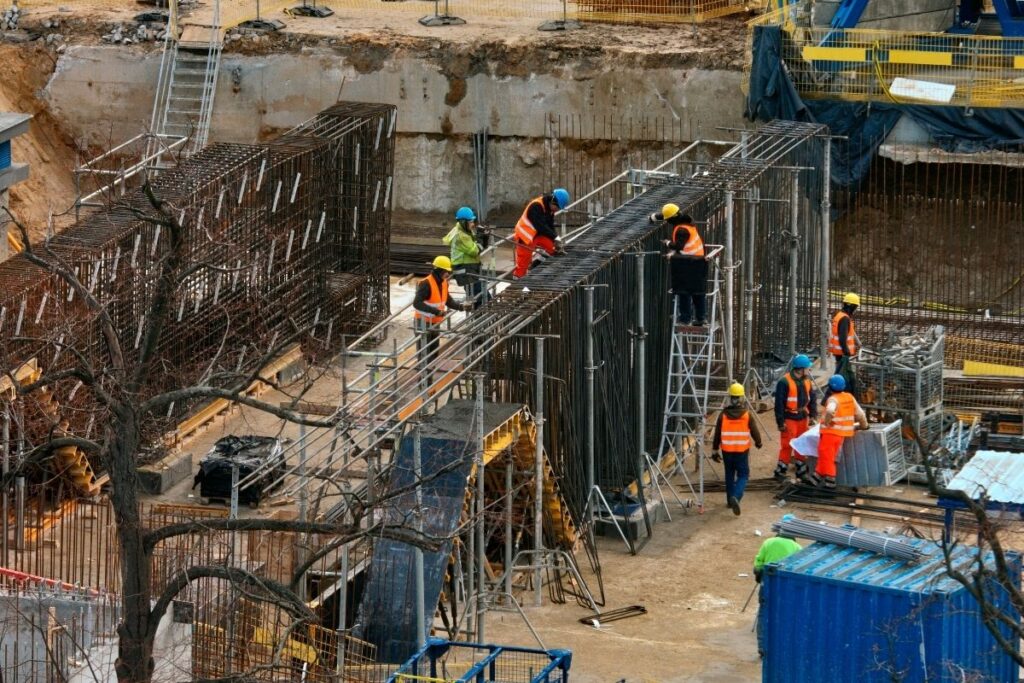
Grading is the process of reshaping a site’s terrain, adjusting slopes, elevations, and contours, so the ground both drains correctly and provides a stable, uniform base for whatever gets built on top of it.
This usually happens in stages. Rough grading comes first, using heavy equipment to cut down high points and fill in low ones, establishing the basic shape of the site and its overall drainage pattern. Fine grading follows, bringing the site to exact, specified elevations with much tighter tolerances, ensuring every section drains and compacts the way the engineering plan calls for. Leveling is the final step in many projects, creating a smooth, even surface specifically prepared for a slab, patio, or foundation footprint.
Skipping or rushing any of these stages doesn’t just create a cosmetic problem. It creates a structural one that often doesn’t show itself until well after construction wraps and the site looks finished.
Why Drainage Should Drive Every Grading Decision
Water that doesn’t have a clear, planned path away from a structure will eventually find its own path, and that path is rarely a convenient one.
The basic principle is straightforward: water needs to flow away from the building, not toward it or, worse, pool against it. For most residential and small commercial sites, this means establishing a slope of roughly 2 to 4 percent moving away from the foundation in every direction immediately around the structure. That number sounds small, but the difference between a slope that drains properly and one that doesn’t can be the gap between a 0.5 percent grade and a nearly flat 0.1 percent grade, a difference easy to miss without precise survey equipment and one that determines whether water actually moves or simply collects.
Improper drainage doesn’t just risk a wet basement or a soggy yard. Water that consistently pools near a foundation gradually undermines the soil supporting it, which can lead to uneven settling, cracked slabs, and structural movement that’s far more expensive to repair than it would have been to prevent with correct grading from the start.
Soil Composition Changes the Whole Plan
Not all dirt behaves the same way once it’s wet, and this is where a generic grading approach can go wrong even with otherwise good intentions.
Clay-heavy soil retains water and can become genuinely unstable once saturated, which means a grading plan on clay needs to prioritize getting water moving away quickly rather than assuming the ground will absorb it. Sandy soil drains fast but often lacks the compaction strength needed for a stable building base on its own, sometimes requiring additional material brought in to achieve the right load-bearing capacity. Most real sites land somewhere between these extremes, which is exactly why a proper soil test, not just a visual assessment, matters before finalizing a grading plan rather than after construction has already exposed a problem.
In some cases, the native soil simply isn’t suitable as-is, and the fix involves importing gravel, stone, or stabilized fill to achieve the right combination of drainage and compaction strength for the specific structure being built.
Compaction: The Step That’s Easy to Rush
Once the ground is shaped correctly, it still needs to be compacted properly, and this is one of the most commonly shortcut steps on smaller projects where budget pressure runs high.
Uncompacted or loosely compacted fill settles unevenly over time as it gradually consolidates under the building’s weight, even if that weight is relatively light. The result is the kind of slow structural shift that doesn’t show up immediately, sometimes taking a full season or more of weather cycles before cracks or uneven floors become noticeable. Fill should be compacted in distinct layers, with each one properly compacted before the next is added, rather than dumped and leveled in one pass and assumed to be sufficient.
This step matters just as much under a gravel pad or a simple concrete floor as it does under a major commercial slab. The scale of the project changes the engineering specifications, not the underlying principle.
Erosion and Sediment Control During the Work Itself
Grading doesn’t just need to protect the finished structure. It needs to manage water responsibly while the site is actively under construction and exposed bare soil is at its most vulnerable.
Disturbed construction sites can generate dramatically more sediment runoff than undisturbed land, which is why erosion control measures, like silt fencing, sediment basins, and inlet protection, typically need to go in before large-scale grading begins, not after a problem is already visible. Grading work should generally move from high points to low points, working with the natural pull of gravity rather than fighting it, and any exposed slope should be stabilized quickly with seeding, erosion blankets, or temporary measures rather than left bare for an extended stretch.
This isn’t just good practice, it’s frequently a regulatory requirement. Many jurisdictions require a stormwater pollution prevention plan for construction sites, and inspectors specifically look for bare soil with no sediment control, runoff directed off-site without any energy dissipation, and disturbed areas left unstabilized beyond a permitted timeframe, often as short as fourteen days of inactivity.
What Poor Grading Actually Costs Later
The expense of getting grading wrong rarely shows up as a single dramatic failure. It shows up gradually, as a series of smaller, recurring repair costs that eventually add up to far more than correct grading would have cost upfront.
Slope repairs after erosion damage typically run a meaningful amount per square yard depending on severity, and sediment that escapes a poorly graded site into a drainage basin or waterway can trigger both expensive cleanup and serious regulatory consequences, including stop-work orders. On the structural side, foundation repairs traced back to grading and drainage problems are consistently among the more expensive categories of post-construction repair, since the fix often involves re-excavating around an existing foundation rather than simply correcting a surface-level issue.
Correct grading, done right the first time, is a cost paid once during site prep. Incorrect grading is a cost that resurfaces repeatedly, often for years, until someone finally addresses the underlying drainage problem rather than the symptom it keeps producing.
Getting the Plan Right Before Equipment Moves
A genuinely useful grading plan starts with real data, not assumptions. That means a topographic survey capturing the site’s actual existing elevations and natural drainage patterns, paired with soil testing to understand exactly what’s being built on. From there, the plan should map out specific cut and fill calculations, target slopes for every section of the site, and a clear drainage path for water once it leaves the building’s immediate footprint.
It’s also worth confirming the plan against local regulations before any equipment shows up, since grading plans typically need to satisfy specific code requirements around stormwater management and erosion control, and getting this approved after the fact is far more disruptive than building it into the plan from day one.
Frequently Asked Questions
What slope is recommended for drainage away from a building’s foundation?
A slope of roughly 2 to 4 percent moving away from the structure in every direction is the general standard for most residential and small commercial sites, though specific requirements can vary based on soil type and local code.
How does soil type affect a grading plan?
Clay soil retains water and can become unstable when saturated, requiring grading that prioritizes fast drainage, while sandy soil drains quickly but may lack compaction strength on its own. A soil test before grading begins helps determine the right approach for your specific site.
What happens if fill isn’t compacted properly during grading?
Improperly compacted fill settles unevenly over time as it consolidates under a structure’s weight, which can lead to cracked slabs, uneven floors, and structural movement that often doesn’t become noticeable until well after construction is complete.
Is erosion control required during grading, or just good practice?
In most jurisdictions, it’s a regulatory requirement, not just good practice. Construction sites are commonly required to follow a stormwater pollution prevention plan, with inspectors checking for proper sediment control and timely stabilization of disturbed areas.
Conclusion
Site grading rarely gets the attention it deserves because the work it does is mostly invisible once the building goes up. That’s exactly why it matters so much. Get the slope, soil handling, and compaction right before construction begins, and the ground underneath the structure quietly does its job for decades. Get it wrong, and the building spends years paying for a decision that was made, and overlooked, before a single wall ever went up.