
Two metal roofs can look nearly identical from the curb and behave completely differently the first time a real storm tests them. One sheds wind-driven rain without a second thought. The other starts leaking at a fastener point within a decade.
The difference almost always comes down to how the panel attaches to the structure, not how shiny or how wavy it looks from the street. Metal roofing splits into two fundamental systems before it ever splits into specific profile names, and understanding that split is the single most useful thing to know before comparing options for any project.
The Real Divide: Exposed Fastener vs Hidden Fastener
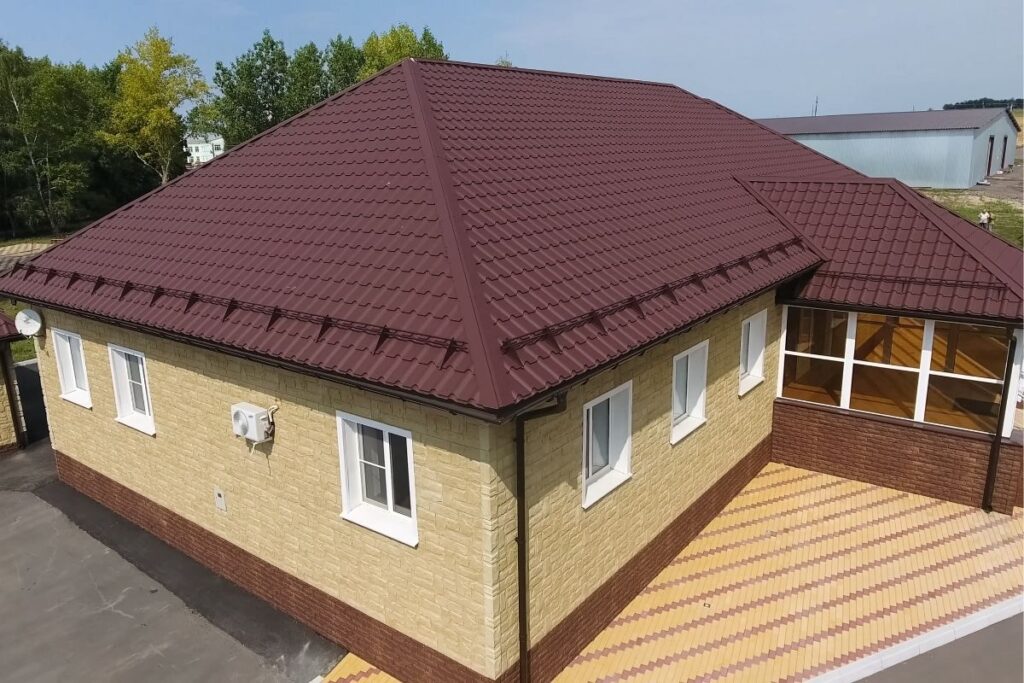
Every metal roofing panel falls into one of these two categories, and this distinction matters more than profile name, color, or even gauge.
Exposed fastener panels attach to the roof deck or purlins with screws that go straight through the panel face, visible on the finished surface and covered with a rubber-gasketed washer at each point to create a seal. They’re the workhorse of post-frame, agricultural, and industrial construction, since they cover more area per panel, install faster, and cost meaningfully less per square foot than hidden fastener alternatives.
Hidden fastener panels use a clip or interlocking system that conceals the fasteners entirely beneath the panel seam, so no screws penetrate the panel face at all. Standing seam is the dominant system in this category, and it’s widely regarded as the highest-performing metal roofing option for both residential and commercial use, commanding a real premium over exposed fastener panels in exchange for that performance.
The practical difference shows up over time. Every exposed fastener point is a potential failure spot, since rubber gaskets degrade with age and UV exposure, and a roof with hundreds of these points eventually needs at least some fastener maintenance. A standing seam roof has none of those penetrations, which is the main reason it consistently outlasts exposed fastener systems by a wide margin.
Corrugated Panels: The Original Profile, Still Working
Corrugated metal roofing is the oldest profile in the category, instantly recognizable by its wave-like pattern of peaks and valleys. It’s also seen a genuine design comeback in residential architecture over the past decade, particularly on modern farmhouse and contemporary builds where the textured look reads as intentional rather than purely utilitarian.
Today’s corrugated panels are a meaningfully different product from the galvanized sheets people picture on old barns. Modern versions come in Galvalume-coated steel, aluminum, and painted finishes with far better corrosion resistance and tighter manufacturing tolerances than older versions ever offered. The wave pattern also has a genuine functional benefit beyond looks, shedding snow and ice more readily than a flat profile, since the curved surface creates less area for water to wick underneath and refreeze.
Corrugated remains a staple for agricultural buildings, covered walkways, canopies, and outbuildings, and it’s increasingly common as an architectural accent on residential and light commercial projects specifically because of that renewed design interest.
R-Panel and PBR: The Commercial Workhorse
R-panel, often called PBR when it includes a bearing leg at the lap joint, is the most widely specified exposed fastener panel in commercial and agricultural metal building systems, and it earns that position through structural efficiency rather than appearance.
The PBR variant’s bearing leg transfers roof loads directly to the purlin below, which improves structural performance specifically at the panel overlap, making it the standard choice for engineered metal building systems where that kind of structural diaphragm performance genuinely matters. R-panel’s rib geometry is generally more optimized for structural spanning than corrugated, which is part of why it dominates primary commercial roofing while corrugated tends to show up more on secondary structures and architectural accents.
When this gets compared directly against standing seam, the trade-off is straightforward: R-panel wins on upfront cost and installation speed, while standing seam wins on long-term performance and appearance. Which one matters more depends entirely on whether the building is a budget-driven agricultural structure or a long-term architectural investment.
Standing Seam: The Premium Tier, With Its Own Sub-Profiles
Standing seam isn’t a single product, it’s a category with several distinct sub-profiles, each suited to slightly different applications.
Snap-lock panels use ribs that interlock directly without specialized tools, secured with concealed clips, and they’re the most common choice for residential and lighter commercial applications where fast, clean installation matters. Mechanically seamed panels take it a step further, using a seaming tool to fold the joint into a tighter, more weathertight connection, which makes them the standard choice for large commercial spans and low-slope applications where weathertightness becomes a specifiable, code-relevant requirement rather than just a preference.
Across all standing seam variants, the defining mechanical advantage is the same: panels float on concealed clips rather than being fixed directly to the structure, which lets the metal expand and contract freely with temperature swings without stressing any fastener point or creating the rippling surface distortion known as oil-canning. This matters most in climates with wide seasonal temperature swings or on large roof spans, where a fixed system would otherwise be fighting against the metal’s own thermal movement.
Steel Gauge and What It Actually Changes
Panel profile determines shape and attachment method. Gauge determines how much the metal itself can take.
29-gauge steel is the cost-effective default for simple agricultural storage, animal shelters, or any application where budget matters more than maximum dent resistance. Stepping up to 26-gauge adds meaningfully better dent resistance and a longer expected service life, a common upgrade for buildings that double as a home shop or business front where appearance and durability both matter. Large commercial spans and low-slope mechanically seamed systems often call for even heavier 22 or 24-gauge material, since the structural demands at that scale go beyond what residential-grade gauge can reliably support.
Matching Panel Type to the Building
A barndominium or any structure functioning as a finished home generally calls for standing seam, since the clean concealed-fastener appearance and long-term performance match what buyers in that category actually expect, often paired with board and batten or shiplap siding for a cohesive exterior.
A purely agricultural building, simple storage, or animal shelter is usually best served by an exposed fastener system like PBR, Tuff Rib, or corrugated in 29-gauge, since the cost savings are real and the building’s use doesn’t demand premium long-term weathertightness. A combination structure, like a workshop that also serves as a visible business front, often justifies stepping up to 26-gauge exposed fastener or even standing seam, depending on how much the building’s appearance actually factors into the decision.
Large commercial spans, low-slope roofs, and anything with serious wind uplift or weathertightness requirements written into the spec almost always point toward mechanically seamed standing seam in heavier gauge, since that’s the system genuinely engineered for those demands rather than adapted to fit them.
Lifespan and the Real Cost Comparison
Expected service life varies meaningfully between these systems, and it’s worth weighing against the upfront price difference rather than comparing cost alone.
Exposed fastener systems typically run 25 to 40 years of service life, while standing seam commonly reaches 40 to 60-plus years with minimal maintenance demands. Both categories consistently outlast asphalt shingles by a factor of two to three, but the gap between exposed fastener and standing seam is real enough that it changes the calculation for anyone planning a roof they expect to be their last. A standing seam roof with decades of near-zero maintenance is a fundamentally different economic proposition than a cheaper system that needs fastener attention partway through its life and a full replacement well before standing seam would need one.
A standing seam roof with decades of near-zero maintenance is a fundamentally different economic proposition than a cheaper system that needs fastener attention partway through its life and a full replacement well before standing seam would need one.
Once the panel type and gauge are settled, the next step is usually finding a supplier or installer who actually carries the right system locally, since not every region has the same access to standing seam crews or specific gauge availability. Checking a metal roofing near me search against a supplier’s service area is a sensible way to confirm coverage before committing to a specific panel type.
Frequently Asked Questions
What’s the main difference between standing seam and exposed fastener panels?
Standing seam panels conceal all fasteners beneath the seam using clips, while exposed fastener panels attach with screws that penetrate the panel face directly. This affects appearance, weathertightness, maintenance needs, and long-term cost.
Is corrugated metal roofing still a good option, or is it outdated?
Corrugated remains a strong, cost-effective choice for agricultural and utility structures, and it’s seeing renewed popularity in residential design specifically for its distinctive textured appearance on modern farmhouse and contemporary builds.
What steel gauge should I choose for a metal roof?
29-gauge works well for basic agricultural and storage applications where budget is the priority. 26-gauge offers better dent resistance and longevity for buildings where appearance and durability matter more. Large commercial spans often require 22 or 24-gauge.
How much longer does standing seam last compared to exposed fastener panels?
Exposed fastener systems typically last 25 to 40 years, while standing seam commonly lasts 40 to 60-plus years, largely because standing seam has no through-fastener penetrations that can degrade or leak over time.
Conclusion
Choosing a metal roofing panel comes down to matching the attachment system and gauge to what the building actually needs, not just picking whichever profile looks best in a photo. Standing seam earns its premium price on long-term performance and appearance, exposed fastener systems like R-panel and corrugated earn their place on cost and installation speed, and the right answer depends on whether the roof needs to be a budget-conscious workhorse or a decades-long architectural investment.